Beyond striving: Designing what comes next for small business empowerment initiative
Mastercard Strive ―
See how Mastercard Strive Indonesia offers several small business considerations for policymakers and stakeholders.
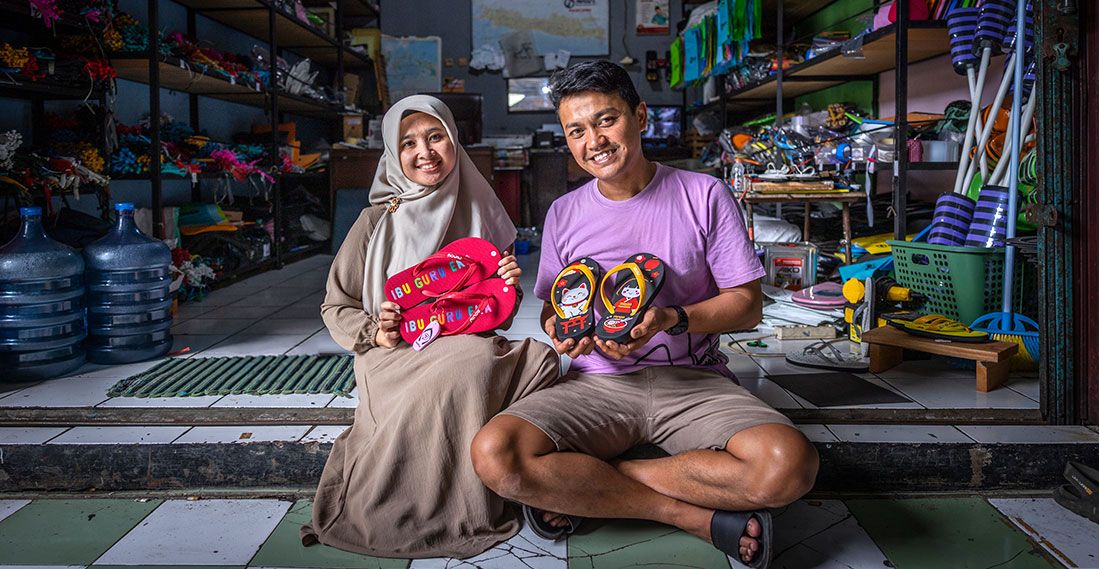
Zaki and Hera in their Mimoy Sandal kiosk
“I am happy that I can create job opportunities for others… I even got goosebumps saying that.”
It wasn’t said on a stage, or in a formal presentation. It came quietly, in the middle of a small workshop, on a grey afternoon that felt heavier than usual. Yet in that moment, the room felt lighter.
You hear something like that during an impact interview, and it stays with you. Not because it is dramatic, but because it is real. Because behind the numbers, behind the reports, there are people who are beginning to see themselves differently—not just as business owners, but as contributors to their communities and the local economy.
And that shift—from surviving to contributing—is where real transformation begins.
From a small workshop to a growing ecosystem of opportunity
In a modest workshop in Bandung, Zaki (37) and Hera (36) have spent over a decade building “Mimoy Sandal”, their sandal business. What began as reselling evolved into their own production line in 2014. Today, they produce anywhere from 100 to over 1,000 pairs daily, reaching markets across Jakarta, Yogyakarta, and beyond.
But the growth was never linear. Like many micro and small enterprises (MSEs), they faced relentless pressure, from competition with cheaper imported goods to unpredictable online sales.
Through the Mastercard Strive Indonesia program, supported by the Mastercard Center for Inclusive Growth and implemented by Mercy Corps Indonesia, they joined a small, hands-on training session; just five participants in a room, going beyond theory to learn survival skills for a changing market. Digital marketing. Profit calculation. AI-generated captions. QRIS payments.
Simple tools. But powerful when applied.
Since then, Mimoy Sandal online presence has strengthened. Profits have increased by an estimated 10–20%. But more importantly, Zaki and Hera’s sense of stability has changed. School fees are paid with less worry. Production can scale without debt. Savings are no longer an afterthought.
And the impact doesn’t stop at their doorstep. Depending on demand, Zaki and Hera now employ between 4 and 20 workers from their community.
“I am happy that I can create job opportunities for others. Ooh, I got goosebumps after saying that. Especially since it was really busy some time ago, so people around me could earn an income. The real happiness is seeing people working because of what we do,” Hera shared.
Zaki and Hera are not alone. They are part of the 56% of participating businesses that reported tangible changes after joining the program. Among those, median revenue increased by 40%. For many, digital marketing (34%) and cost-of-goods calculation (20%) became the most valuable tools, not because they are complex, but because they are actionable.
Unlocking scale and depth through multi-stakeholder collaboration
Since 2023, Mastercard Strive Indonesia has reached more than 500,000 small businesses, 75% of which are women-led/ owned, the majority of whom had not previously accessed formal training. Achieving this scale required more than programmatic expansion; it required coordinated action across multiple levels.
At the national level, institutions such as the National Development Planning Agency (Bappenas), the National Council for Financial Inclusion (DNKI), and the Financial Service Authority (OJK) provided strategic alignment with broader development priorities. Financial service providers enabled access to financial services and products. At the subnational level, local governments and facilitators ensured that interventions were adapted to local contexts and needs.
Mercy Corps Indonesia played a central convening role by bringing partners together to align priorities and minimize overlap or redundancy across interventions. Through the Mastercard Strive Learning Network, Mercy Corps facilitated collective action, ensuring that stakeholders moved in coordination to implement shared commitments effectively. This integrated approach was reinforced by continuous monitoring and evaluation, enabling the program to remain responsive and relevant across diverse contexts.
Implications for future programming
As Indonesia continues its economic transformation, the need for effective small businesses empowerment strategies will only increase. The experience of Mastercard Strive Indonesia offers several considerations for policymakers and stakeholders designing similar initiatives:
- Strengthen ecosystem collaboration: Multi-stakeholder partnerships are essential to align policy, finance, and implementation, as well as to avoid redundancy and overlap among actors. Each actor contributes distinct value that, when coordinated, enhances overall effectiveness.
- Prioritize practical capability building: Training that focuses on immediately applicable skills—such as financial management and digital marketing—can deliver rapid and measurable impact.
- Invest in last-mile delivery: Leverage local facilitators and institutions that play a critical role in building trust, ensuring accessibility and relevance, particularly for underserved populations.
- Leverage digital infrastructure: Expanding access to digital payments and platforms can unlock new markets and improve business resilience.
- Embed adaptive learning systems: Continuous monitoring and feedback loops enable programs to respond to evolving needs and contexts.
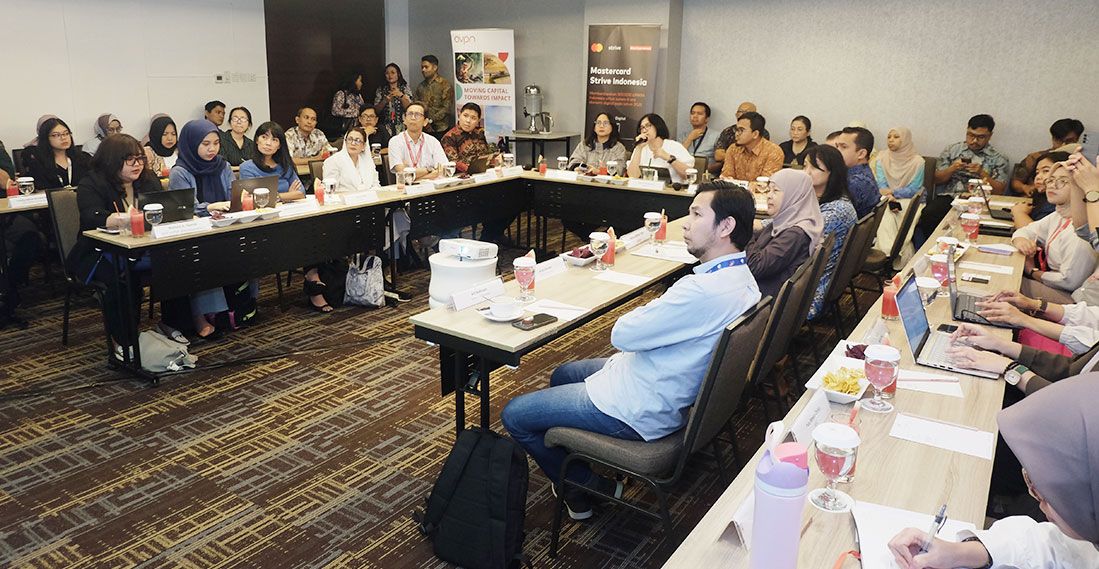
One of the Mastercard Strive Learning Network events, convening stakeholders from public, private, and NGO partners.
Moving beyond the program
Programs end. But transformation should not.
What we see emerging from this collaboration is not just a successful intervention, but a model: one that demonstrates how multi-stakeholder partnerships can unlock real, sustained change.
The collaboration between Mastercard Center for Inclusive Growth, Mercy Corps Indonesia, government partners, financial institutions, digital players, and local actors, such as local banks and district government offices, demonstrates how integrated approaches can address complex development challenges. More importantly, it provides a replicable model for advancing inclusive economic growth.
For policymakers, the question moving forward is how to embed these approaches within national and subnational systems, ensuring that support for MSEs is sustained, scalable, and responsive.
For development practitioners and stakeholders, the challenge is to continue refining delivery models that balance scale with depth, and innovation with accessibility.
Ultimately, the success of such efforts will be measured not only in aggregate indicators, but to the extent in which they enable individuals and communities to move from vulnerability to opportunity—and from opportunity to contribution.
That is what lies beyond striving.
Related articles
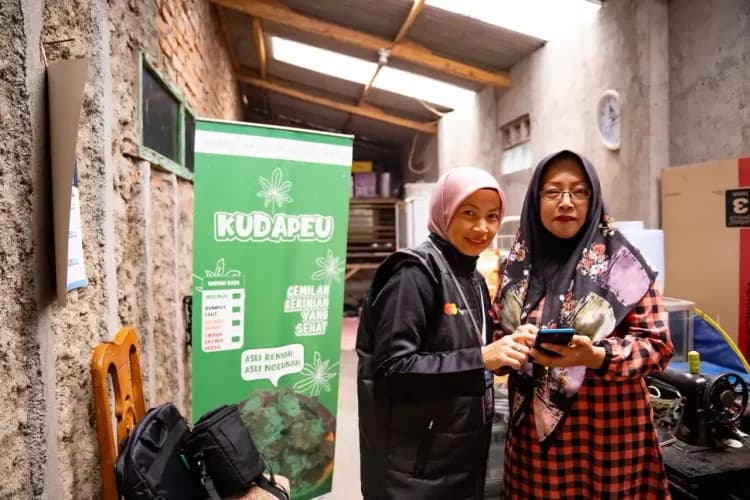
How local partners drive sustainable growth for small businesses
Discover how local governments, mentors, and community networks help small businesses grow sustainably through trusted partnerships and hybrid digital support.