Supporting Mexican business owners on the digitalization journey
Mastercard Strive ―
Our research with BFA Global shows that 60% of small businesses lost at least half of their profits in the previous year due to emergencies, health issues, or rising prices.

Eighteen years ago, María opened a restaurant in Puebla, Mexico. It was a celebration of her love for the country’s flavors and was a huge success – until it wasn’t.
When the pandemic hit in 2020, everything unravelled. Sales collapsed, and so did María’s confidence. Running a restaurant amid a global health crisis was hard enough and doing it while juggling numerous other responsibilities made it near impossible.
Micro and small businesses such as María’s are the beating heart of Mexico - employing 70% of the nation’s workforce [1]. Despite this, they are also incredibly vulnerable to economic shocks.
Our research with BFA Global shows that 60% of small businesses lost at least half of their profits in the previous year due to emergencies, health issues, or rising prices [2]. Adding to the instability is the fact that more than half (55%) of workers in Mexico are informal, which drives uncertainty for the country’s small business owners when it comes to employment.
Women-owned businesses are even less resilient. In Maria’s words, “as women entrepreneurs in Mexico, we do have it a little more difficult because of the culture and the traditional gender roles. These ideas can minimize a lot of women - that they can't be entrepreneurs, they can't be leaders, and they can't get ahead.”
Launched in 2022, the Mastercard Strive program in Mexico (now known as Mastercard Strive: Avance MiPyMe), led by the Mastercard Center for Inclusive Growth in partnership with Fundación Capital and BFA Global, wanted to improve the conditions for MSMEs.
The flagship program aims to support small businesses through mentorship and the adoption of digital tools, to increase resilience and confidence.
Among the women that were part of Mastercard Avance MiPyMe, 60% established at least one mentoring relationship, resulting in an average 18% increase in income.
Mentoring to support skill development for small business owners
Women entrepreneurs, especially those like María who run businesses alone, face acute time pressure. Balancing business, household, and caregiving responsibilities leaves little room for digital upskilling. These time constraints are compounded by lower digital confidence among women.
Mastercard-owned research, commissioned as part of our Empowerment for All campaign [3], reveals that the top areas women founders in Mexico want support is:
- Finding available funding options (46%)
- Better training in basic business skills (42%)
Mentoring and tailored support is therefore essential to support small businesses to succeed. In recognition of this, Mastercard Avance MiPyMe has developed a mentorship program, Micromentor, so that business owners like María can find people who listen, challenge thinking, provide expert business advice, and instil confidence.
The reality of life as a small business in Mexico
Maria’s story is not rare – the need for greater support is felt by business owners across the country.
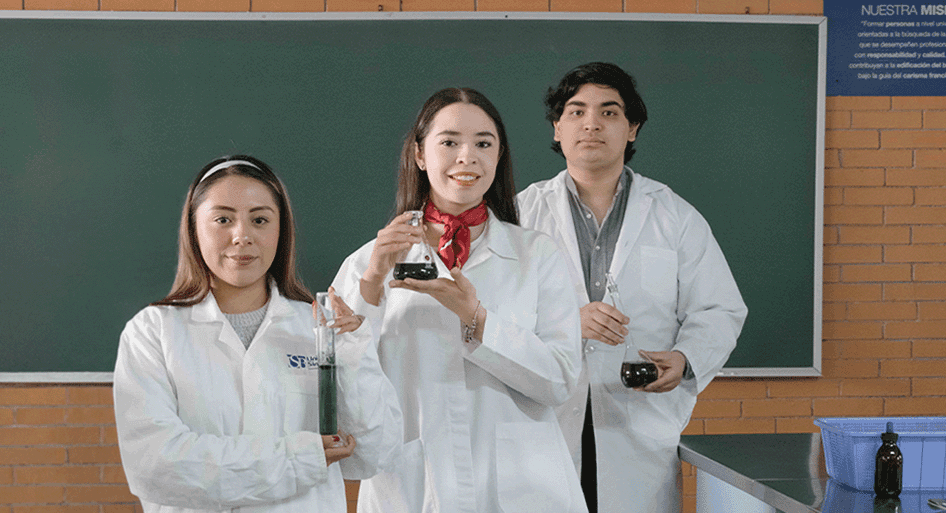
Mexico City is home to three young entrepreneurs: Alan (20), Emily (21) and Karina (21). Determined to address the lack of access to domestic gas in underserved areas of the country’s capital, where 59% of the population struggles with basic utilities, these three students founded Moorlight: a company that has developed an easy-to-use device that generates sustainable cooking gas from algae.
However, as young professionals freshly graduated from university, they initially faced challenges. What started as a home-based student project had become a business operating out of a basement – and Alan, Emily and Karina suddenly found themselves in need of financing and business guidance.
The Moorlight team, as part of Mastercard Avance MiPyme, also received guidance from Micromentor to help them refine their business plan, develop financial projections, and design a distribution strategy. Alan, Emily and Karina now use digital tools for budgeting and have started to structure their business for growth.
These are just two examples, and the results speak for themselves.
The digital revolution
For business potential to be truly realized, human guidance must be matched with digital tools – a combination we like to refer to as ‘tech and touch’. Our research with BFA Global shows that using at least three digital tools can significantly bolster small business resilience in the face of crises [4]. Of those who participated in the program, over half (53%) reported increases in savings or propensity to save [5].
To be effective, these tools must meet entrepreneurs where they are at, and at the right point in their journey. In Mexico, while more than half of small businesses use digital tools to communicate with customers, fewer than a quarter use them to collect payments, issue invoices, or manage inventory [6].
But why is this?
While many are aware of digital payment tools, there is a distinct lack of ease around their adoption for fear they would be complex to manage and come with hidden fees. This is perhaps unsurprising, given that most recent data shows that 82% of consumers say that cash remains their preferred payment method [7].
As a result of this hesitation, small businesses such as local cafes and family-run shops – affectionately known as ‘mom-and-pop’ shops - are under constant threat of being eclipsed by bigger, more modernized companies. Research shows that these shops therefore open and close quickly – with an exit rate of 15% [8].
Using digital tools to meet small businesses where they are
Choosing the right tools, and using them effectively, can be complex. Entrepreneurs wear many hats and do not always have the time needed to build a level of proficiency in digital skills that can support growth.
The capabilities offered via the Mastercard Avance MiPyMe program include Con-Héctor, an AI-powered chatbot accessible via WhatsApp. Business owners can message it just as they would a friend, receiving instant, tailored guidance on topics such as accounting, marketing, finance, and digital sales.
With research showing that 83% of adults in Mexico use WhatsApp [9], the adoption of Con-Héctor, a tool developed by Fundación Capital, does not feel like an overwhelming mountain to climb, as it is embedded in a platform that is widely used and familiar to many citizens already.
Looking forward
So far, the Mastercard Strive: Avance MiPyMe program has supported close to 500,000 small businesses countrywide, helping them on their journey to digitalize. But the work is not done. We will keep powering ahead to support businesses such as María’s and Moorlight.
As these efforts continue, two overarching takeaways hold. Digitalization is most effective when paired with mentorship, and when it asks meets entrepreneurs where they are at.
Footnotes
- INEGI, Estadísticas a propósito del Día de las Micro, Pequeñas y Medianas Empresas (mipymes), 2025
- Mastercard, Strive Mexico: Roads to Resilience for MSEs, 2022
- Mastercard Empowerment for All data, 2025
- Mastercard, Navigating Challenges: Assessing MSE Resilience in Mexico
- Fundación Capital-owned data
- Mastercard, From reluctance to acceptance: Insights on the adoption of digital payments by small businesses in Mexico, 2024
- The Paypers, Mexico: 2024 analysis of payments and ecommerce trends, 2024
- Harvard University, Fragmented Markets and the Proliferation of Small Firms: Evidence from Mom-and-Pop Shops in Mexico, 2022
- Pew Research Center, WhatsApp and Facebook dominate the social media landscape in middle-income nations, 2024