How Nest is helping grow the U.S. craft economy
Mastercard Strive ―
Nest helps small-scale makers strengthen the business side of their work, connecting them to training, mentorship, and new market opportunities.
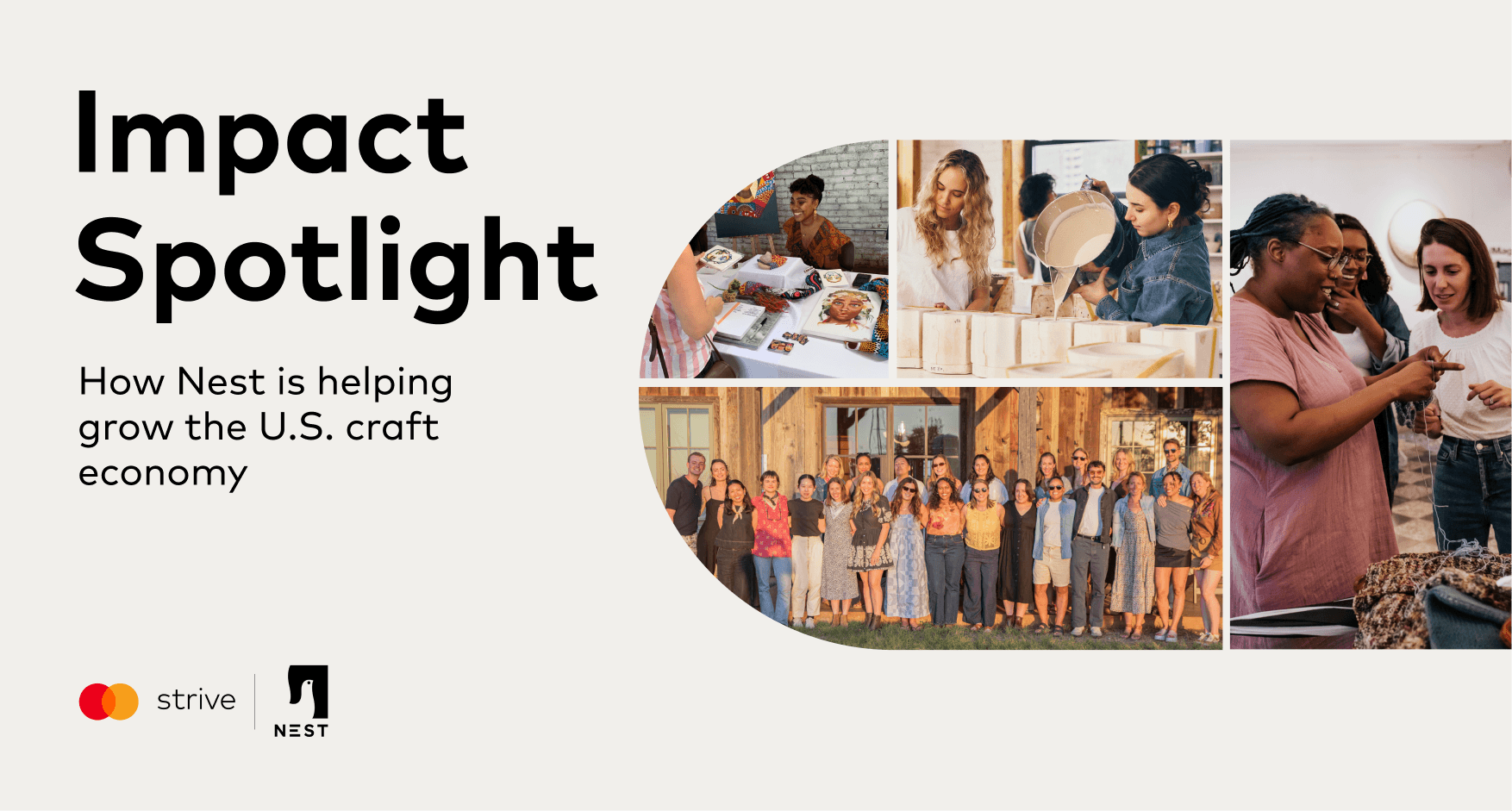
Across the United States, thousands of makers are running small businesses rooted in craft, culture, and community. But turning that craft into a viable and stable business often requires a different set of skills, from pricing and operations to e-commerce and market access, that many maker entrepreneurs are much less familiar with.
Through its Makers United program, Nest is working to close that gap. With support from Mastercard Strive USA, the program helps small-scale makers strengthen the business side of their work, connecting them to training, mentorship, and new market opportunities, centering much of the curriculum around digital tools such as e-commerce. More than 900 U.S. makers have already participated, with over 180 now actively selling through e-commerce platforms.
We sat down with Rebecca van Bergen, Founder and Executive Director of Nest, to talk about what’s changing for small business owners in the craft economy and what it takes to support their growth in a way that reflects how these businesses actually operate.
What makes supporting maker businesses different from traditional small business support?
For many makers, the creative aspects of running a business (like developing products and establishing a brand identity) come naturally, while the operational and administrative aspects are less intuitive. Nest aims to provide creative entrepreneurs with resources and information to address all aspects of building and running their businesses.
What was this work designed to change?
Together with Mastercard Strive USA, Nest supports makers and creative entrepreneurs through Makers United, connecting them to tools, opportunities, and a peer community to help grow their businesses. At its core, the work is about expanding access, not just to training, but to the relationships and market pathways that make growth possible.
What’s changing for makers as a result of this work?
We’re seeing increased visibility for makers, along with growing excitement to connect with peers, reach new audiences, and take advantage of opportunities to expand their businesses. For many, it is also their first time accessing structured business development training or reaching customers beyond their immediate communities.
What are you seeing on the ground across different communities?
Makers’ small business challenges are not universal. Through our location-specific makers United programs, we see how much those challenges are shaped by the local resources and opportunities available, whether in rural areas, suburban communities, or cities. That’s why we begin by listening to makers’ experiences and adapting our support to each community.
How is digital access changing what’s possible for maker businesses?
Improved digital access is opening new doors. Makers are able to connect with training, resources, and community in ways that were not previously possible, especially in rural areas where in-person opportunities and large marketplaces may be limited.
What is the next phase of this work?
With support from partners like Mastercard Strive USA, we’re continuing to invest in makers and creative entrepreneurs by expanding into new regions, offering more in-person workshops, creating new digital training resources, and building partnerships with brands and retailers to open up additional market opportunities.
What gives you optimism about the future of the maker economy?
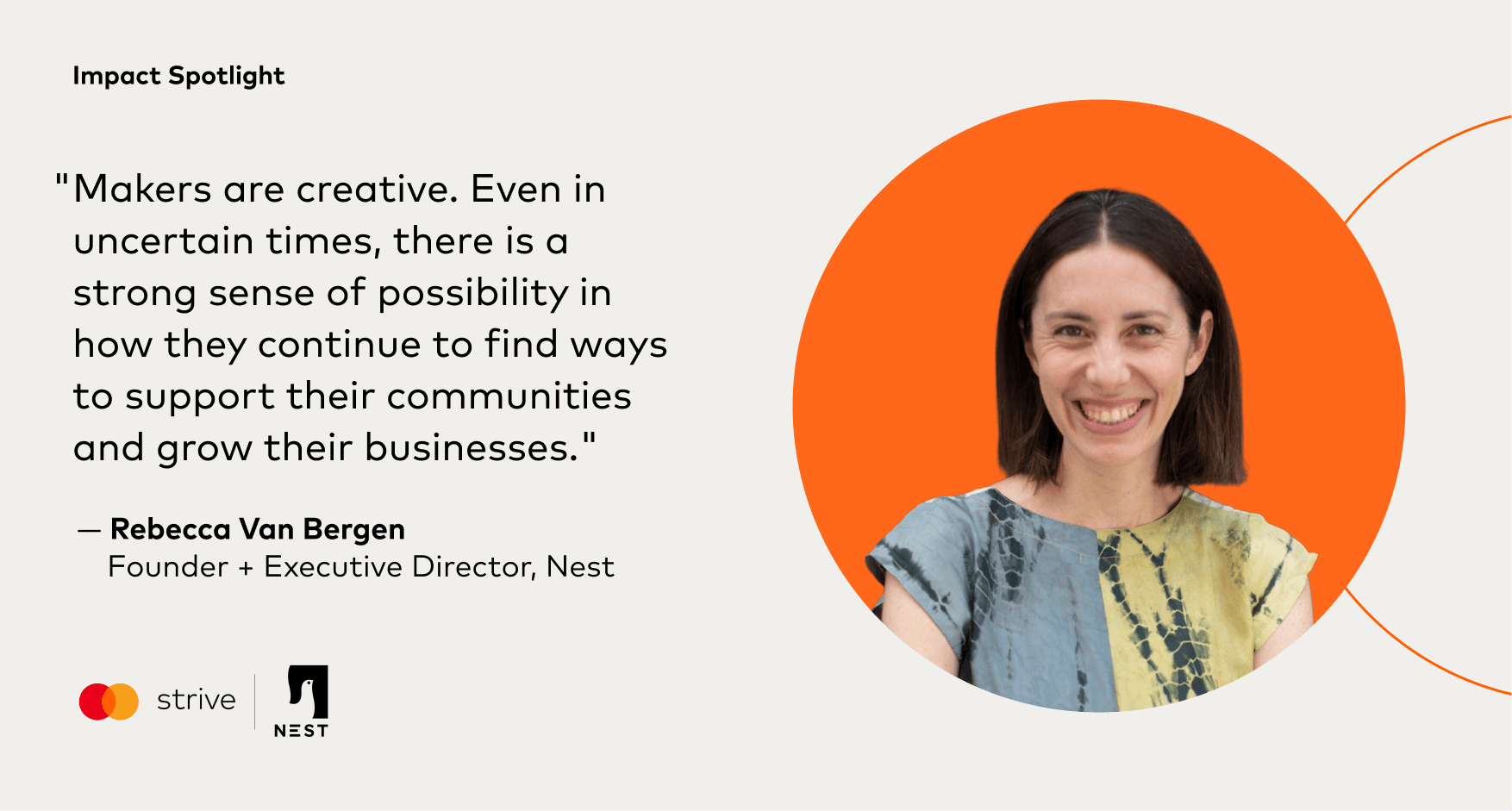
Makers are creative. Even in uncertain times, there is a strong sense of possibility in how they continue to find ways to support their communities and grow their businesses. That creativity, paired with the right support, is what will continue to move the craft economy forward.
Related articles
Expanding small business access to credit by strengthening community development credit unions
Inclusiv has built a Loan Participation Marketplace that supports community development credit unions to establish and scale small business lending programs.
How Heartland Forward is turning insights into action across 20 U.S. states, the third largest economy in the world
Community leaders, journalists, and policymakers trying to understand what's happening in America's heartland often face a basic problem: the data is scattered, hard to find, or simply doesn't exist.
How Grameen America is using digital tools to strengthen trust with entrepreneurs
Grameen America has been modernizing how it delivers support at scale, most recently through a mobile app designed to expand digital access that also helps strengthen trust with their members.
How Community Reinvestment Fund, USA is bridging the gap between community lenders and the capital small businesses need
The small business ecosystem is famously siloed in the United States. Community Reinvestment Fund, USA builds, deploys, and scales technology that breaks down these silos.
How Accion Opportunity Fund is turning “no” into a path forward for small businesses through personalized financial guidance
For many small business owners, access to capital shapes what’s possible. But understanding how to qualify, evaluate options, and make informed decisions can be difficult.

How Next Street is fixing a fragmented support system for U.S. small businesses
For many small businesses, figuring out where to turn for funding, coaching, and guidance can feel like a job in itself. Next Street is building products that help them find and access this support.
How Appalachian Community Capital is strengthening financial resilience through shared infrastructure
Appalachian Community Capital is focused on making the small business ecosystem in Appalachia work better through investing in partners, networks, and new tools for CDFIs.
How Low Income Investment Fund is strengthening the “workforce behind the workforce”
Family child care providers make it possible for parents to work and for local economies to function. But these small businesses, despite their importance, are often underserved.

How Right to Start is expanding entrepreneurial opportunity for all
Entrepreneurship is widely supported, but rarely treated as a civic priority. Right to Start is working to change that through grassroots organizing, policy engagement, and entrepreneur storytelling.
Accessity: Using new technologies to build better pathways to capital for small businesses
What started as an internal push for efficiency using AI has turned into a bigger shift in how Accessity’s team works.
Supporting innovations shaping the next chapter in community finance
For small businesses, access to capital often determines what’s possible and what’s not — from expanding a storefront, to upgrading online ordering systems, or making payroll through a slow season.

The network effect: Inside the CDFI networks and associations powering U.S. small business growth
CDFI networks, such as an industry associations or coalitions, function as conveners that capture and reflect the collective voice of members and help their members in many different ways.
Digging deeper roots in a time of change: Looking back on our work supporting small businesses
The key question that emerged from our work in 2025 was: How do we help small business support organizations not only weather these shifts, but turn them into opportunity?
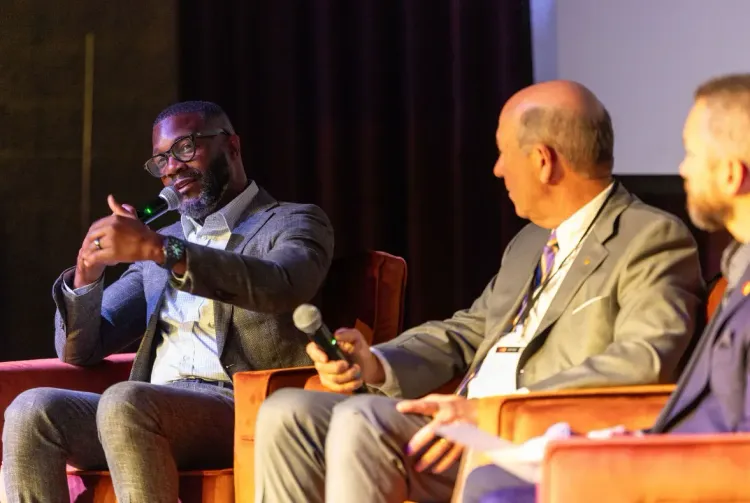
Bridging opportunities, coordinating action: How Alabama is investing in its small business…
How Alabama leaders are coordinating partnerships, data, and technology to strengthen the small business ecosystem and expand access to resources statewide.
Collaboration as infrastructure: Lessons on strengthening partnerships in the U.S. small business support system
Explore how collaboration, shared technology, and network partnerships are strengthening the U.S. small business ecosystem and expanding access to capital at scale.
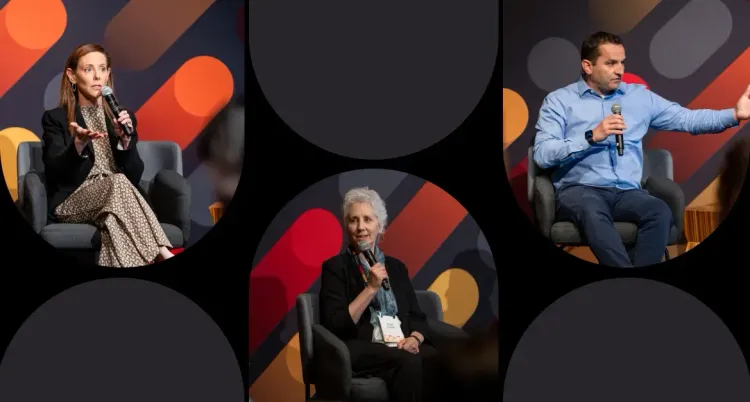
Scaling impact by standardizing data: A conversation on how better analytics and collaboration can unlock more investment for community lending
Having more consistent definitions and standards about community lending data is one of the six shifts identified in our survey of small business support leaders.
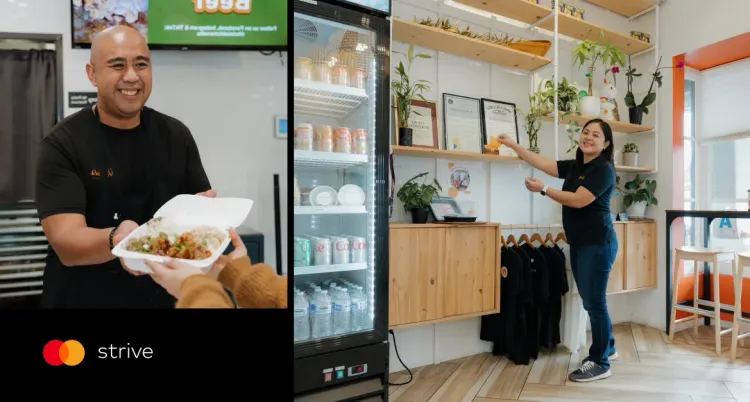
High tech, high touch: How community lenders use digital tools to stay personal with small businesses
By Araba Sapara-Grant Maria worked in the flower district in Manhattan for many years, but her dream of opening her own mobile flower shop seemed untenable.
Built for all, built to last: Six shifts that could change the U.S. small business landscape for generations of entrepreneurs
Six key shifts—from flexible capital to stronger partnerships—could transform the U.S. small business ecosystem and improve long-term entrepreneur success.

Funding creativity, fueling small business growth: Bridging the capital gap in the creative economy
The creative economy is one of the worlds fastest growing sectors, representing $2 trillion in economic activity globally and potentially comprising 10% of GDP by 2030.

Improving small business outcomes through mental health: A profile on Our Village United’s holistic model
How Our Village United’s ELEVATE program combines wellness, funding, and mentorship to help underserved entrepreneurs grow resilient, scalable small businesses.

Embracing an abundance mindset in Kansas: How new collaborations are creating a stronger small business ecosystem
The fifth Mastercard Strive USA Summit recently took place in Lawrence, Kansas in partnership with the Kansas Department of Commerce.
From theory to practice to scale: Mastercard Strive USA’s impact on small businesses in year 2
Mastercard Strive USA significantly grew its portfolio, impact, and voice in Year 2 and set the stage for strengthening small business ecosystems further in Year 3.

Challenging assumptions: How a distinct operations model sets CDFIs apart in a vast financial ecosystem
Discover how Community Development Financial Institutions (CDFIs) provide mission-driven financing, expand access to capital, and help underserved entrepreneurs grow sustainable businesses in the U.S.
Why helping small businesses succeed should be a philanthropic priority
To create an equitable economy, grantmakers should address the financial and training hurdles that cause so many entrepreneurs to fail.